
News · September 30, 2026
OpenAI Is Turning Existing AI Spend Into a Route to Partner Software
OpenAI has introduced two separate partner programs that let included ChatGPT usage and part of eligible enterprise commitments influence adoption of third-party software. The commercial mechanism matters more than another model benchmark.
OpenAI’s most consequential DevDay announcement may not be a model. It is a change in where existing OpenAI spend can exert influence.
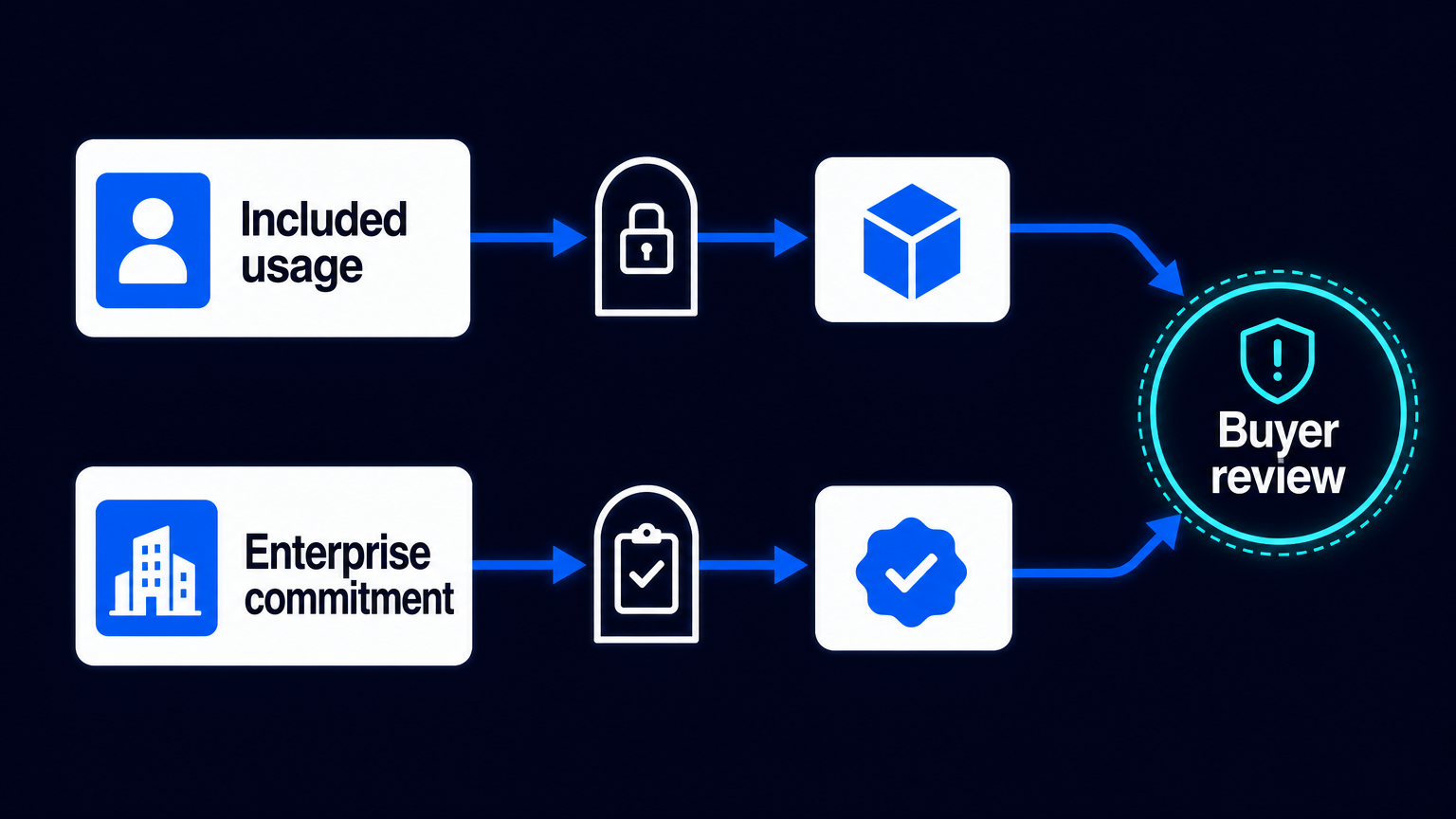
On September 29, OpenAI announced two related but distinct routes into partner software. First, Plus and Pro users can sign in to participating applications with ChatGPT and may authorize eligible AI requests in those applications to count against the usage included in their ChatGPT plan. Second, eligible enterprise customers can apply part of an existing OpenAI commitment toward approved partner products through the OpenAI Marketplace.
Neither program makes partner software free. Neither creates a universal OpenAI wallet. But together they make OpenAI more than a model provider or application vendor. It is beginning to become a distribution and procurement channel through which prior customer spend can shape which external software gets tried and bought.
Two programs, two economic mechanisms
The consumer and professional program is built around Sign in with ChatGPT. A user of a participating application can authenticate without creating or sharing an OpenAI API key. Plus and Pro users can separately permit eligible AI requests from that application to use part of the allowance already included in their ChatGPT plan.
The boundary matters. The application’s weekly limit is a cap on the user’s overall ChatGPT allowance, not a fresh pool of capacity reserved for that application. A user can set that limit per participating application, but every approved request still draws from the same overall included usage. And the partner may still charge for its subscription, infrastructure, services, or premium features.
OpenAI named 16 initial plan-usage partners, including Cognition’s Devin, Notion, Vercel, T3, OpenClaw and Dactyl. That list is not a marketplace catalogue in the conventional sense. It is a distribution surface: a partner application can reduce the immediate friction of trying an AI feature because an eligible customer may already have usable capacity in a ChatGPT plan.
The enterprise mechanism is different. The OpenAI Marketplace lets eligible enterprise customers apply part of an existing OpenAI commitment to approved partner products. Its initial 32 partners span creative software, customer experience, legal technology, cybersecurity and model infrastructure. This is a purchasing route, not a user-level consumption feature.
OpenAI has not published universal eligibility rules, the share of a commitment that can be applied, discounts, transaction volumes, or full contracting and billing mechanics. The Marketplace currently presents a request-to-buy process and a partner waitlist. Buyers should therefore treat it as a developing commercial path, not as a fully specified substitute for an established cloud marketplace.
What changed—and what did not
What changed is the economic boundary around OpenAI’s customer relationship. Included ChatGPT usage can now be relevant inside selected third-party applications. Some existing enterprise commitments can now be relevant to selected partner purchases. In both cases, OpenAI’s commercial relationship can affect a decision that previously sat entirely between a software buyer and an external vendor.
What did not change is equally important. Plus and Pro access does not entitle a user to all partner functionality, and it does not remove the partner’s own price. Sign in with ChatGPT is not an API key-sharing arrangement, but it also does not mean that a partner receives no user data: basic account information is shared, and a partner may request additional permissions under its own terms.
For enterprises, the announcement does not mean that every customer can redirect all OpenAI spending to any marketplace vendor. OpenAI says that eligible customers can apply part of a commitment toward approved products. It has not disclosed the percentages, commercial terms, or operating results needed to calculate savings or procurement-cycle effects.
The two programs should not be collapsed into one story about transferable credits. One changes how a Plus or Pro subscriber can consume included usage in a participating application. The other may change how an eligible enterprise allocates part of a contractual commitment. The overlap is strategic, not operational.
The distribution effect is the point
Model releases still matter. OpenAI says GPT-6.1 Sol approaches Astra on several professional, coding and computer-use evaluations at one-fifth of Astra’s standard input and output token prices. Anthropic says Claude Sonnet 5.5 is more than 30% faster than Sonnet 5 and costs up to 30% less per task in its testing. Those are meaningful price-performance claims.
But they leave the customer with the same fundamental procurement problem: choose a model or service, fund it, integrate it, and establish a commercial relationship. OpenAI’s partner moves address a different layer. They may make a participating application easier to test because a user has already paid for some applicable capacity. They may make an approved vendor easier to put in front of an enterprise buyer because part of an existing commitment may be relevant to the purchase.
That is a distribution advantage, not proof of better software. A partner could gain consideration before a feature comparison begins. The buyer’s cost perception can also change: an expenditure that is already committed or included may feel cheaper than new budget, even when the total cost of ownership, contractual terms, integration work, and vendor concentration deserve the same scrutiny as before.
The operating question for buyers
For software leaders, the practical response is not to assume savings. It is to separate cash already committed from value actually created. A partner product should still be evaluated on its distinct price, data handling, permissions, integration burden, support model, exit options, and the workload it displaces or improves.
- For a team using Sign in with ChatGPT, set application-level weekly limits deliberately and establish who may authorize the use of shared plan allowance.
- For a partner application, assess its separate subscription and service charges rather than treating included AI usage as the product’s total price.
- For enterprise procurement, ask which customers and products qualify, how much of a commitment can apply, who contracts and invoices, and how support responsibilities are divided.
- For portfolio governance, measure concentration: does the arrangement reduce an existing cost, or does it make further dependence on one commercial ecosystem appear artificially inexpensive?
OpenAI has not yet shown adoption, savings, transaction volume, or shorter buying cycles. Those results remain unproven. Yet the structural move is already clear. AI providers are competing not only on the capability and price of inference, but on their ability to turn an installed spending base into a route through the wider software market.
For buyers, the disciplined question is simple: does this arrangement lower the total cost of a useful capability, or does it merely relocate the apparent cost into a commitment already made? The answer will differ by application and contract. It should be established before the convenience of existing spend becomes the reason to choose the vendor.

